

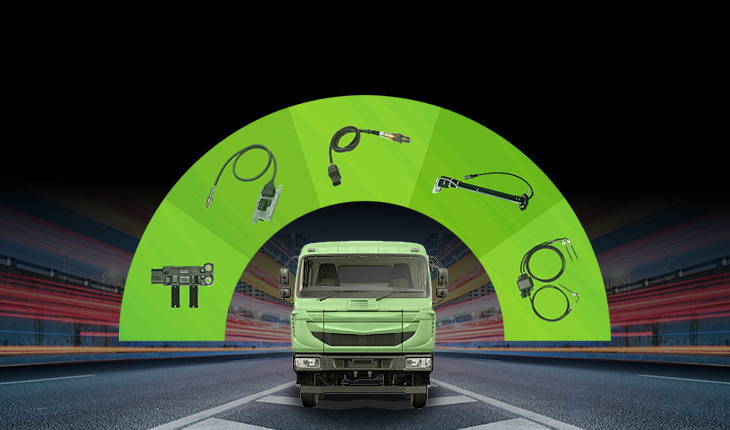
Automotive and industrial sensors measure emissions, pressure, temperature, and air-fuel ratios in engines and machinery. These measurements allow electronic control systems to regulate combustion, protect critical components, and maintain emission compliance. Learn how emission sensors work and why they are essential for compliance.
Automotive and industrial sensors measure critical operating parameters such as emissions, pressure, temperature, and air-fuel ratios within engines and industrial systems. These sensors provide the real-time data required for automation, emission control, and system diagnostics.
Modern emission control systems rely on specialized sensing technologies to monitor exhaust gases, filtration performance, and combustion conditions. This continuous feedback allows electronic control units (ECUs) to regulate engine performance and manage aftertreatment systems, while maintaining compliance with environmental standards.
- Automotive and industrial sensors monitor emissions, temperature, pressure, and air-fuel ratios in engines and industrial systems.
- These sensors provide real-time data that allows control systems to regulate combustion, emissions, and system performance.
- Modern emission control systems rely on technologies such as NOx sensors, differential pressure sensors, urea quality sensors, exhaust gas temperature sensors, and lambda sensors.
- Precision sensing enables compliance with regulations including BS VI & VII, CEV V/VI, TREM V, CPCB IV+, as well as China VI, Euro VI & VII, and EPA standards.
Automotive and industrial sensors are electronic devices that detect physical or chemical changes within mechanical systems and convert those changes into electrical signals.
These signals are transmitted to control units that interpret the information and adjust system behavior accordingly.
In modern engines and industrial equipment, sensors are essential for:
- Monitoring system performance
- Controlling emissions
- Regulating combustion processes
- Maintaining operational reliability
Without continuous sensor feedback, automated systems cannot maintain the precision required for modern environmental regulations and performance standards.
Different sensor technologies measure specific parameters that influence engine and system operation. Together, these automotive and industrial sensors create a monitoring network that allows engines and industrial machines to operate safely, efficiently, and within regulatory limits.
NOx Sensors
Function
Detect nitrogen oxide concentration in exhaust gases
Key Applications
SCR emission control
Delta P Sensors
Function
Measure pressure differences across filtration systems
Key Applications
DPF monitoring
Urea Quality Sensors
Function
Measure DEF concentration and quality
Key Applications
SCR dosing control
Exhaust Gas Temperature Sensors (EGTS)
Function
Monitor exhaust gas temperatures
Key Applications
Catalyst protection
Lambda Sensors
Function
Measure oxygen concentration and air-fuel ratio
Key Applications
Combustion optimization
Each sensor contributes to the accurate monitoring of emission systems and overall engine performance.
NOx Sensors
NOx sensors measure nitrogen oxide concentration in exhaust gases. These measurements allow SCR systems to regulate urea dosing precisely, helping vehicles maintain compliance with emission standards.
Delta P Sensors
Differential pressure sensors measure pressure differences across diesel particulate filters (DPF). Variations in pressure indicate soot accumulation and trigger regeneration cycles when necessary.
Urea Quality Sensors (UQS)
Urea quality sensors monitor the concentration and condition of diesel exhaust fluid (DEF). Accurate measurement ensures correct SCR system operation and prevents dosing errors caused by contaminated or diluted fluid.
Exhaust Gas Temperature Sensors (EGTS)
EGTS sensors monitor exhaust temperatures across aftertreatment systems. These readings protect catalytic components and ensure that regeneration processes occur within safe temperature ranges.
Lambda Sensors
Although similar sensing technologies are used across sectors, automotive and industrial systems present different operational challenges.
Although similar sensing technologies are used across sectors, automotive and industrial systems present different operational challenges.
Automotive applications
Automotive sensors operate in highly dynamic environments where vehicles experience constant changes in speed, load, and temperature.
Typical applications include:
- Heavy-duty trucks
- Light commercial vehicles
- Agricultural machinery
- Off-highway equipment
Sensors used in vehicles must withstand:
- High vibration environments
- Rapid temperature changes
- Exhaust temperatures approaching 950°C
- Long duty cycles over vehicle lifetimes
In addition, automotive sensors must integrate with onboard diagnostic (OBD) systems that continuously monitor emission system performance.
Industrial applications
Industrial sensors are typically used in stationary or semi-stationary equipment that operates for long periods under stable conditions.
Common applications include:
- Continuous system monitoring
- Predictive maintenance
- Operational efficiency improvements
In these environments, sensors often detect early performance changes that indicate equipment wear or potential system failures.
Emission regulations continue to evolve globally as governments aim to reduce pollutants from engines and industrial equipment. These regulations require vehicles and machinery to maintain emission limits under real-world operating conditions.
When choosing sensors, it’s crucial to consider compliance standards. For example, Tau Power Electronics’ automotive and industrial sensors are engineered to meet BS VI & VII, CEV V/VI, TREM V, CPCB IV+, as well as China VI, Euro VI & VII, and EPA standards, ensuring OEMs stay ahead of compliance requirements.
Sensors make this possible by continuously measuring exhaust composition and system performance. The resulting data allows control systems to adjust engine operation and maintain compliance throughout the system lifecycle.
For original equipment manufacturers, sensor accuracy directly influences system reliability and regulatory compliance.
Precision sensors enable OEMs to:
- Meet global emission regulations
- Improve combustion efficiency
- Enable real-time system diagnostics
- Protect aftertreatment components
- Support predictive maintenance strategies
As emission systems become more complex, reliable sensing technologies play an increasingly central role in engine and system design.
When OEMs select emission sensors for vehicles or industrial equipment, they typically evaluate several factors beyond basic measurement capability.
Key considerations for OEM sensor components include:
- Measurement accuracy and stability across operating ranges
- Durability in harsh environments, including vibration and extreme temperatures
- Integration compatibility with existing engine control units and aftertreatment architectures
- Compliance with regional emission standards such as BS VI and Euro regulations
- Supply reliability and localized manufacturing capability
As emission regulations tighten and system architectures become more complex, reliable sensing technologies become a critical component of modern powertrain and industrial system design.
High-precision sensor technology is evolving alongside advances in engine design, digital diagnostics, and environmental regulation.
Key trends shaping the future of sensor technology include:
- Stricter emission regulations worldwide
- Integration of multiple sensing functions within emission control systems
- Advanced diagnostics and digital communication protocols
- Increased demand for localized manufacturing and supply chains
As vehicles and industrial systems become more electronically controlled, sensors will continue to play a foundational role in monitoring performance and maintaining compliance.
Tau Power Electronics develops emission sensing technologies designed to support these evolving requirements while enabling integration across automotive and industrial platforms. To learn more, speak to our team.
FAQS
Industrial sensors measure physical and chemical parameters such as temperature, pressure, gas composition, and fluid quality within automated systems. Industrial measurement solutions allow operators to monitor equipment performance, detect potential faults, and optimize industrial processes.
Automotive sensors detect operating conditions such as exhaust gas composition, temperature, pressure, and oxygen concentration. These measurements are converted into electrical signals and transmitted to the vehicle’s electronic control unit. The control unit then adjusts engine and emission systems to maintain performance and regulatory compliance.
Emission sensors monitor pollutants and operating conditions within exhaust systems. By providing accurate real-time measurements, they allow vehicles and industrial machinery to regulate combustion and aftertreatment systems, ensuring compliance with environmental regulations.
Automotive sensors are designed for dynamic environments involving vibration, temperature fluctuations, and variable operating loads. Industrial sensors typically operate in more stable environments and are optimized for continuous monitoring and long-term reliability.
Emission control systems commonly rely on several specialized sensors:
- NOx sensors for nitrogen oxide measurement
- differential pressure sensors for filter monitoring
- urea quality sensors for SCR system control
- exhaust gas temperature sensors for catalyst protection
- lambda sensors for air-fuel ratio monitoring
These sensors work together to regulate emissions, maintain engine performance, and enable diagnostic monitoring.